A research cooperation agreement was established between Hospital Israelita Albert Einstein (HIAE) and the São Carlos technology company employing the development team. It included the donation of an instrument for research in chromatic corneal topography. The historical report noted HIAE’s recognition by AméricaEconomía as a leading Latin American hospital.
Engineers Felipe Aramizu and Vinícius Rodrigues installed the equipment and trained staff at HIAE’s DayClinic surgical center. The collaboration aimed to investigate new approaches to keratoconus, a condition involving corneal thinning, with an ophthalmology group led by Drs. Augusto Paranhos and Claudio Lottenberg.
Professor Luis Alberto Vieira de Carvalho, then president and head of R&D, described this type of collaboration as common in developed countries but still emerging in Brazil and elsewhere in South America. He expressed his belief that Brazil could compete directly with the United States and Europe in ophthalmic instrumentation within ten years, noting existing competition with Zeiss and other international companies in corneal topography and specular microscopy. He hoped that the hospital’s physicians and the company’s engineers would help develop faster, more precise diagnostic approaches for serious visual disorders such as keratoconus.
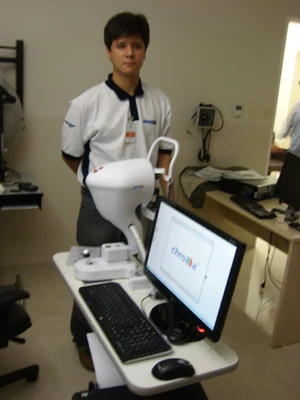
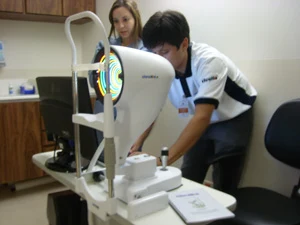
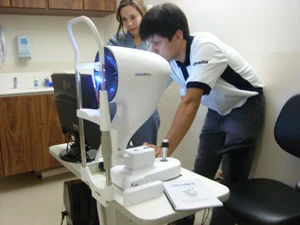
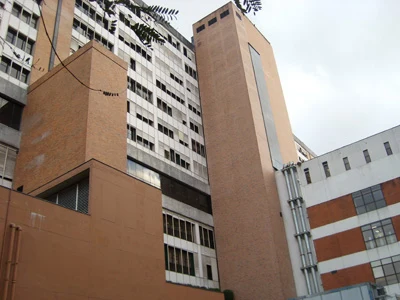
The accompanying images show chromatic Placido disks, the pupillometry system, and Hospital Israelita Albert Einstein.

Project resources
Brochures and manuals link to English EVOptica editions. Historical recordings, source citations and legacy interface screenshots may retain their original language. External archive links may no longer be available.