December 13, 2013. This historical technical article discussed growing use of corneal cross-linking in Europe and the United States. It described European use since 2008 and reported regulatory developments as understood at publication. Regulatory statements and protocols in the source should be read in their historical context.
Cross-linking aims to increase the mechanical stiffness of a cornea with insufficient rigidity, as in keratoconus. Previously, severe cases might require corneal transplantation, or keratoplasty. The technique creates cross-links within the collagen structure using riboflavin, a form of vitamin B, activated by ultraviolet light. The article likens the resulting reinforcement to metal reinforcement within concrete.
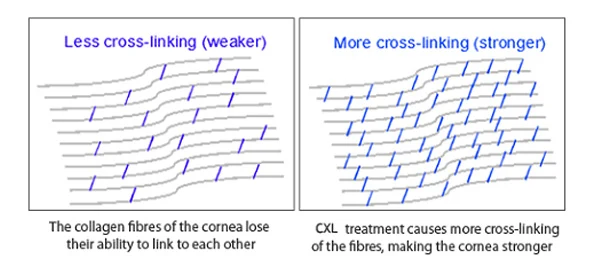
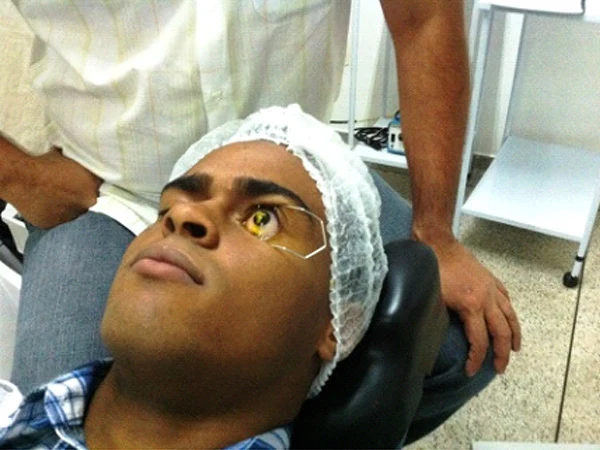
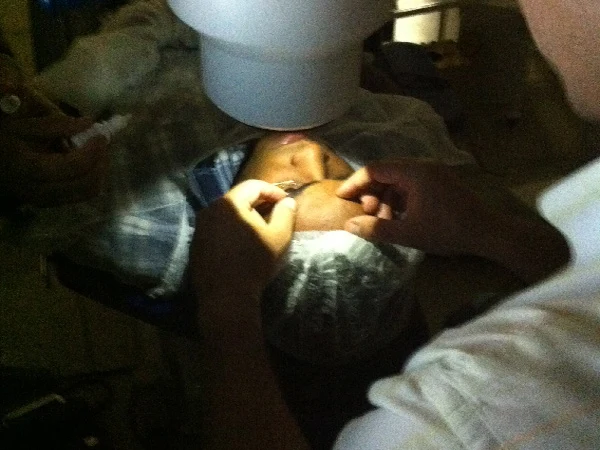
Figure 1 explains the principle. Figures 2 and 3 show an eye during treatment: riboflavin drops are applied and the cornea is illuminated with ultraviolet light peaking around 365 nm. The associated instrument example was the WaveLink cross-linking system.
The article presented cross-linking as a promising option for patients with substantial keratoconus. Figure 4 reproduces a Brazilian protocol developed at Escola Paulista de Medicina in 2010. Further archived links and files provide related riboflavin protocols associated with Avedro and information on application procedures. This material is preserved as historical technical background rather than current treatment guidance.
Project resources
Brochures and manuals link to English EVOptica editions. Historical recordings, source citations and legacy interface screenshots may retain their original language. External archive links may no longer be available.