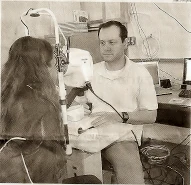
Primeira Página, September 20, 2009, page A11. Article by Marco Rogério: “Equipment analyzes the cornea.”
The report described an ophthalmic diagnostic instrument developed in Brazil at a company incubated at the ParqTec high-technology park foundation. Chroma examined the anterior corneal surface and was reported to cost approximately 30% of a comparable imported instrument. Founded by physics PhD Luis Alberto Carvalho, the company had been at ParqTec for around nine months and was delivering approximately 20 to 30 instruments per month through a largely manual production process.
Chroma enabled examination of anterior corneal topography, curvature, optical power, and optical quality. The report highlighted its capacity to analyze highly distorted eyes. Funding included R$650,000 from FAPESP PIPE in two stages, R$150,000 and R$500,000, as nonrepayable support, and R$120,000 through FINEP’s PRIME innovation-company program.
Carvalho credited FAPESP support with making the project possible and described the instrument as evidence of Brazil’s technological potential. Discussing illumination, the report referred to long-life “super-LED” technology intended to avoid lamp replacement, and also mentioned another microscope developed by the team for corneal examination.
Ygara Lúcia Souza Melo Fragoso, then 25, a Federal University of Alagoas graduate studying computer science at UFSCar, described the work as a new challenge involving unfamiliar tools and technologies. She emphasized its potential to improve treatment and the importance of FAPESP’s research investment.
Vinícius Rodolfo Rodrigues, then 21, a mechatronics technician and systems-analysis undergraduate at IFESP, worked on the instrument’s electronics and circuit boards connecting it to computers. He expressed pride in contributing to a long-running Brazilian research project that could reduce dependence on imported equipment and described FAPESP’s financial support as fundamental for the incubated company.