THE PLATFORM’S DEVELOPMENT RECORD
Technology with a documented foundation.
VON combined computerized perimetry with a reference database that included measurements from Brazilian participants. The team worked on the software, electronics and mechanics, with a Portuguese-language touchscreen interface for patient registration, examination control and report printing. Feedback from ophthalmologists informed improvements to the hardware and software.
The archived page stated that the instrument was undergoing testing and ANVISA authorization and was not yet commercially available at that time. This is a historical project description.
The stated total visual-field angle was 100°. Test patterns were Full 50° with 160 points; Central 30° with 120 points; Glaucoma 22°/50° with 100 points; Central 22° with 96 points; Wide 22° to 30° with 128 points; Peripheral 30° to 50° with 72 points; and Macula 10° with 48 points.
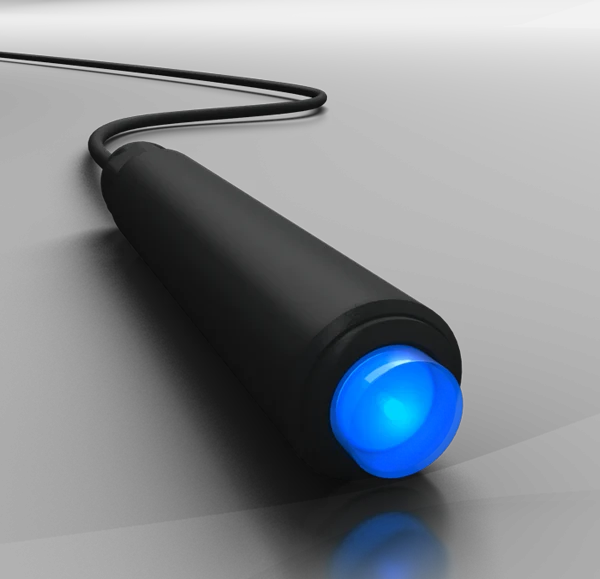
Exposure time, response time and inter-test delay were each adjustable from 0.1 to 10 seconds. Stimuli used rear-projected green LEDs in Goldmann sizes II, III and IV, with stated intensity from 0.03 to 1,000 apostilbs. Background illumination was listed as 10 apostilbs, approximately 3.2 cd/m², with automatic level control. Blue LED illumination and an acrylic light-guiding system provided status indication and examination-area lighting.
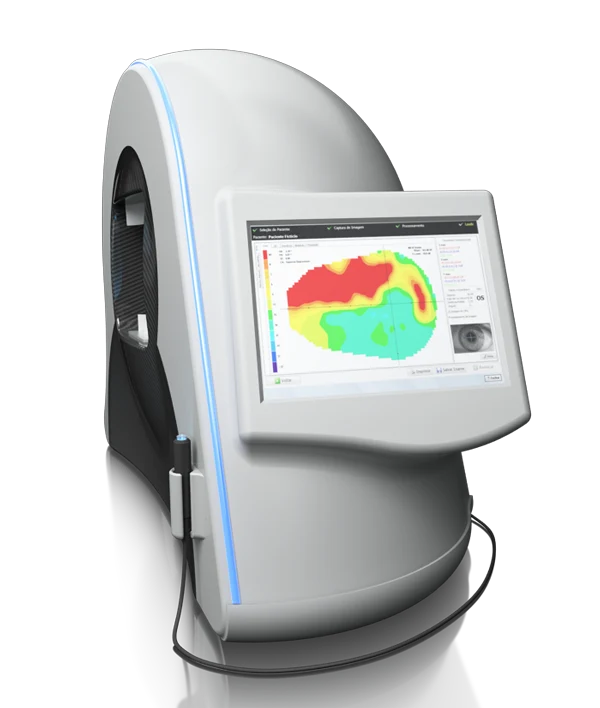
Fixation monitoring used the blind-spot method and a high-resolution monochrome CCD camera, with a yellow LED fixation target. Trial-lens diameter was 38 mm. The instrument included a touchscreen display and joystick positioning.
Archived operating conditions were +10°C to +40°C, atmospheric pressure from 700 to 1,060 hPa, and relative humidity from 30% to 85%. Transport and storage temperature was −10°C to +40°C. The source lists classification LSM 1 B and CE 1434 as historical entries; these are not current EVOptica certifications.
Dimensions were 700 × 650 × 500 mm (height × width × length), with a weight of 14 kg. Supply voltage was 110–120 V or 220–240 V AC at 50–60 Hz; maximum power consumption was 30 W.
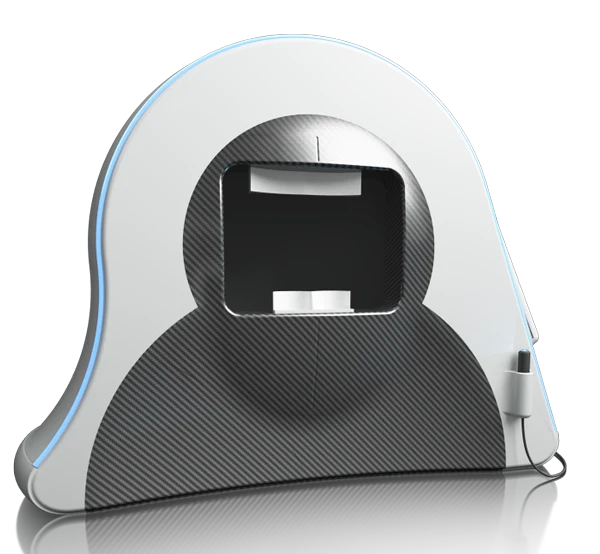
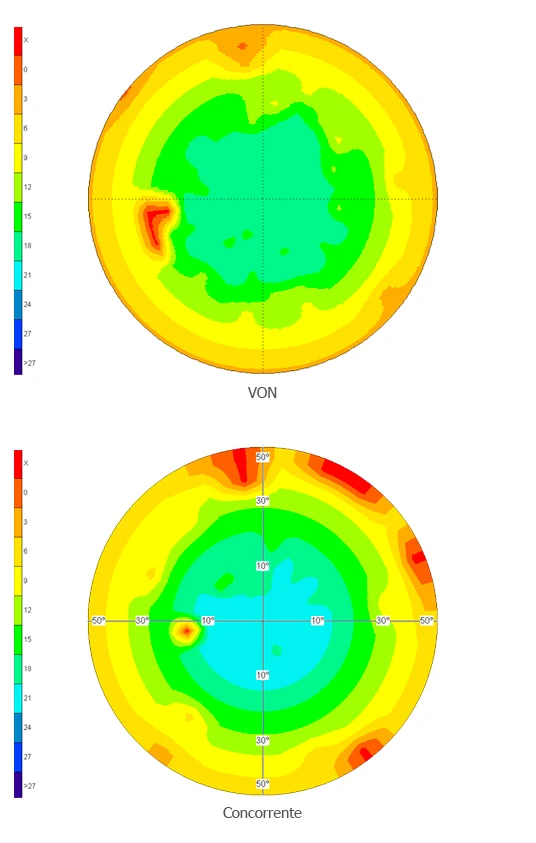
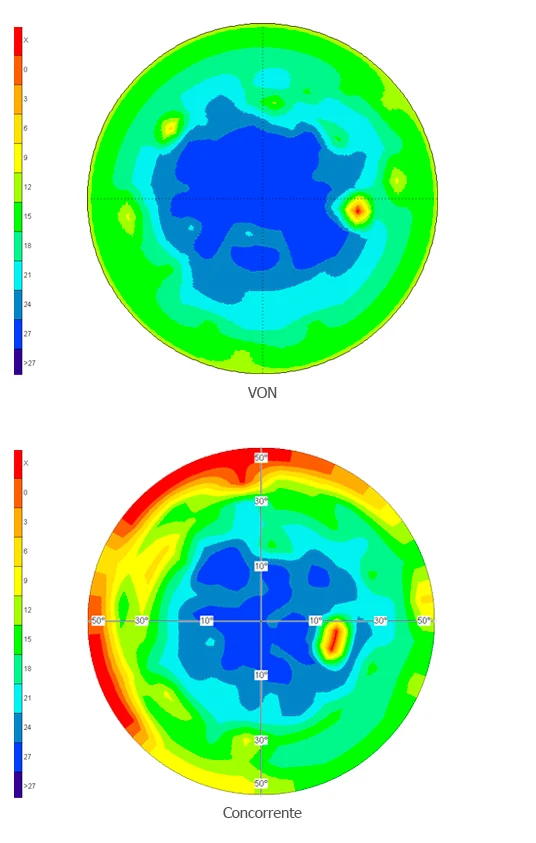
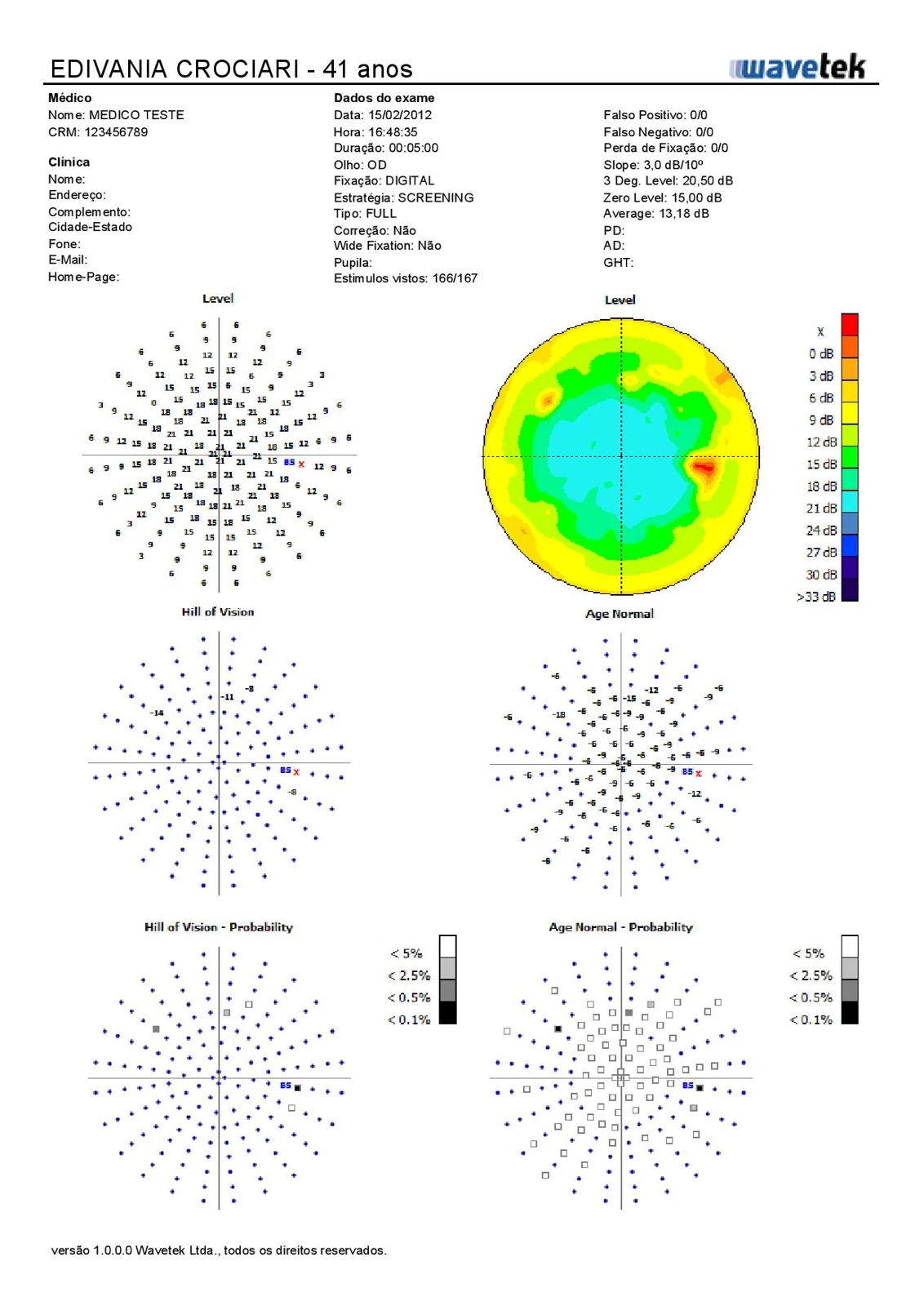
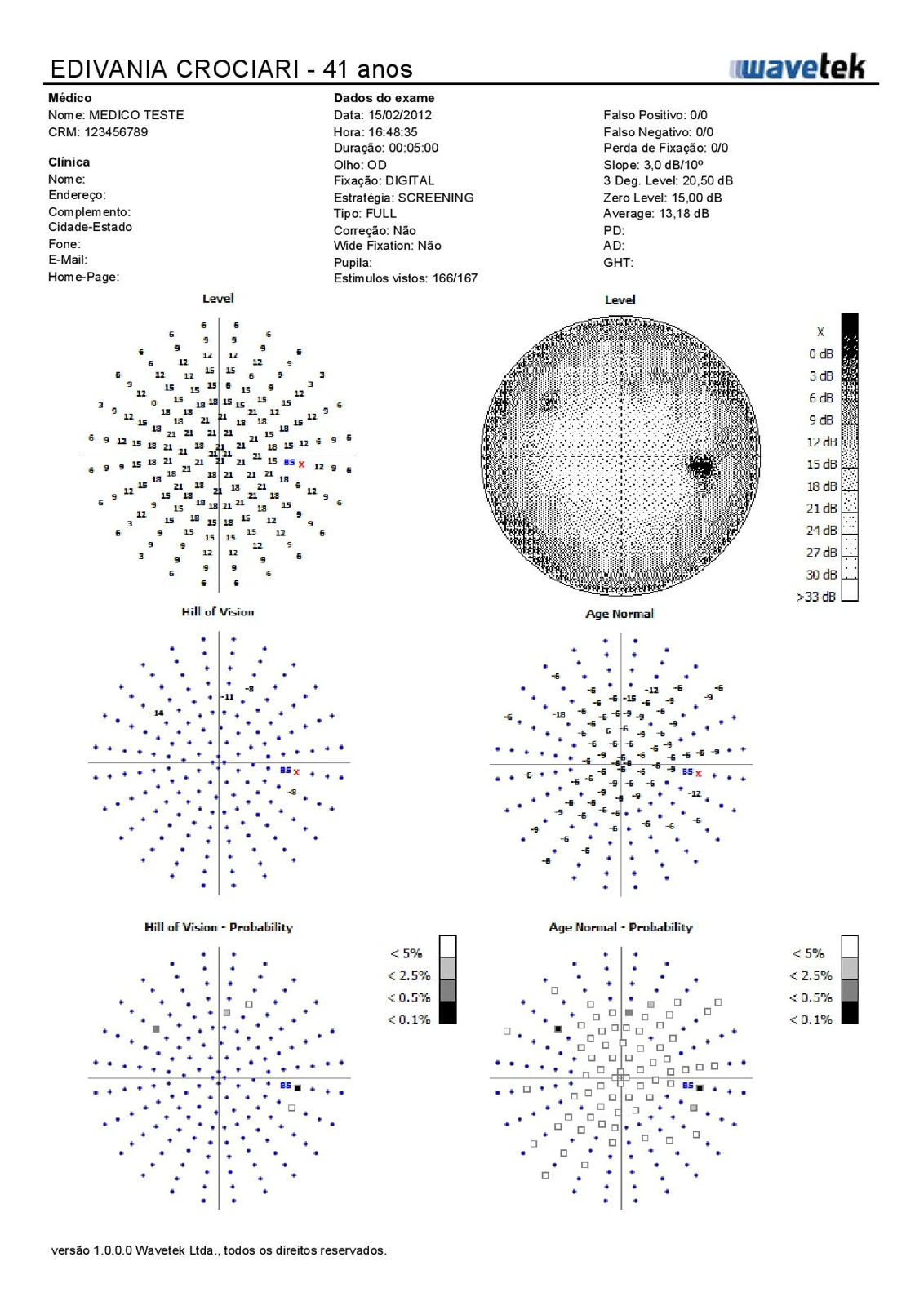
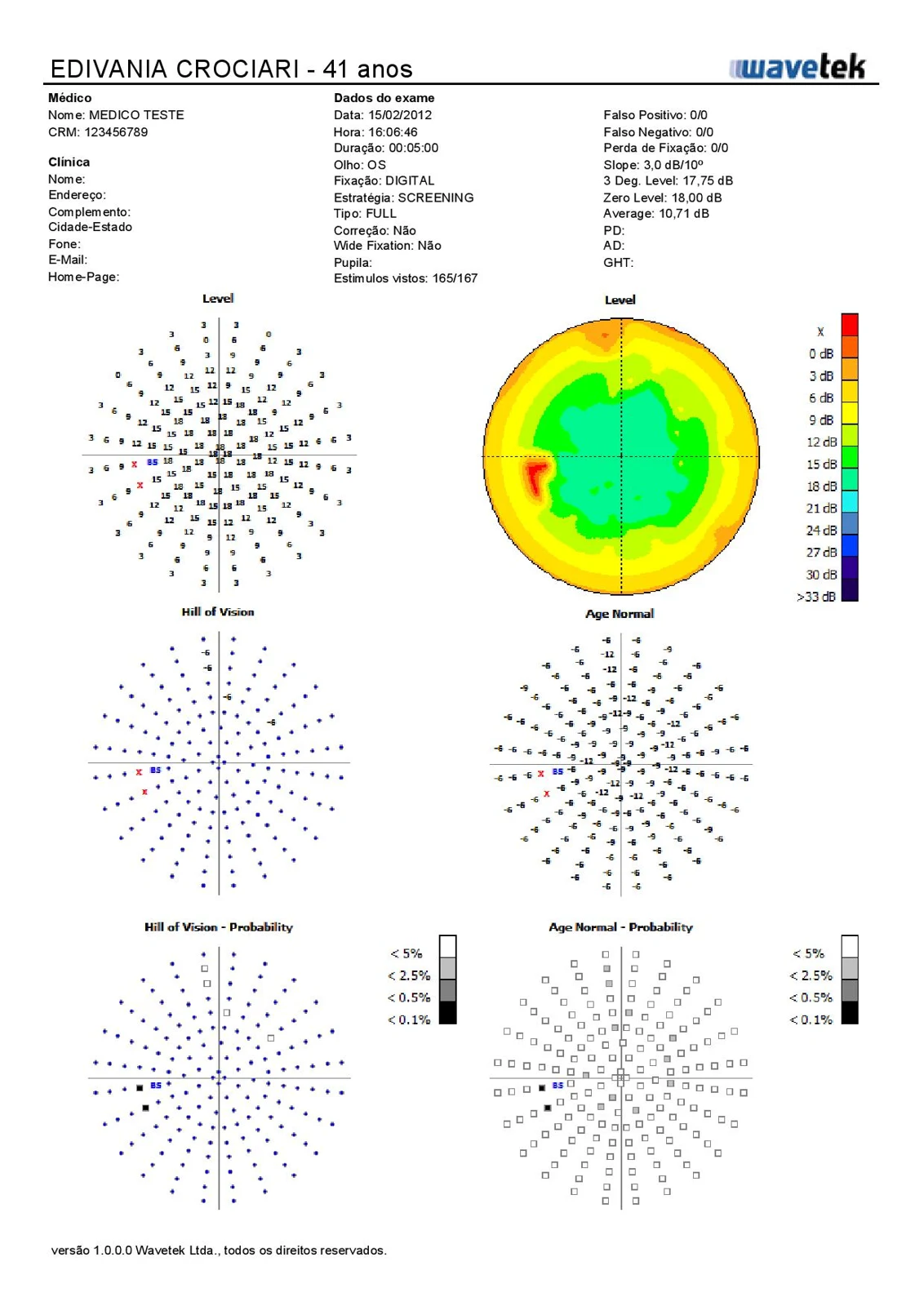
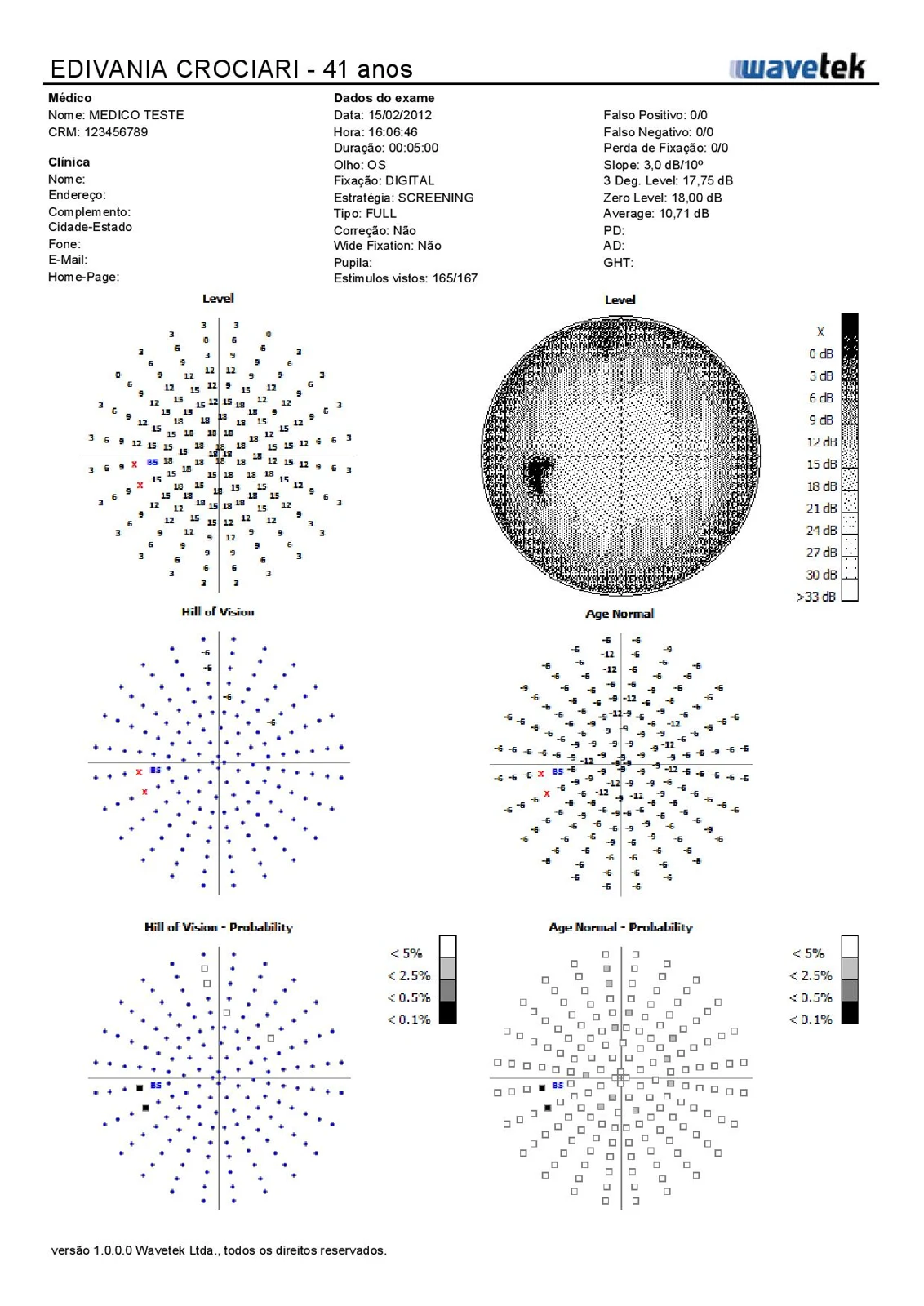
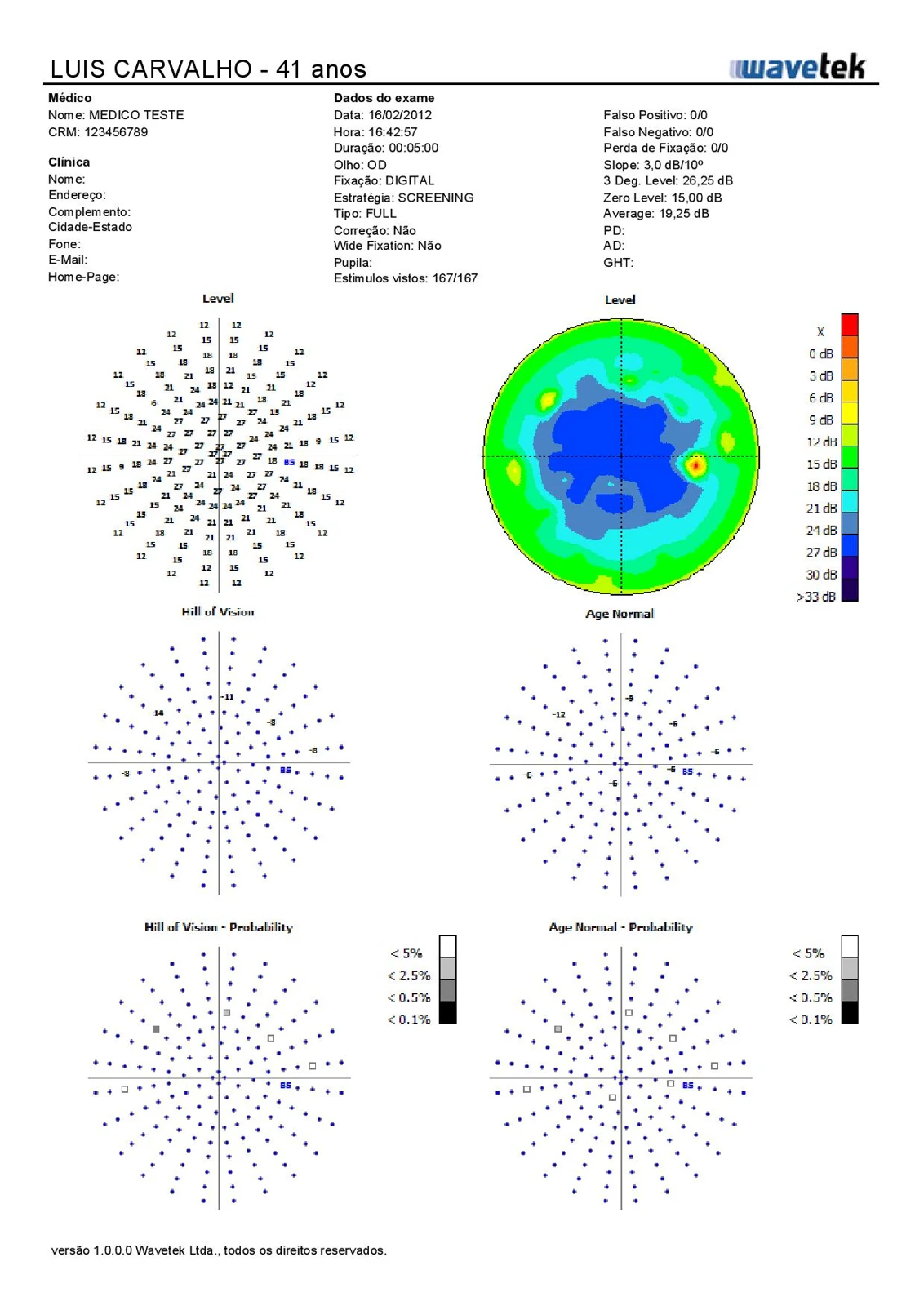
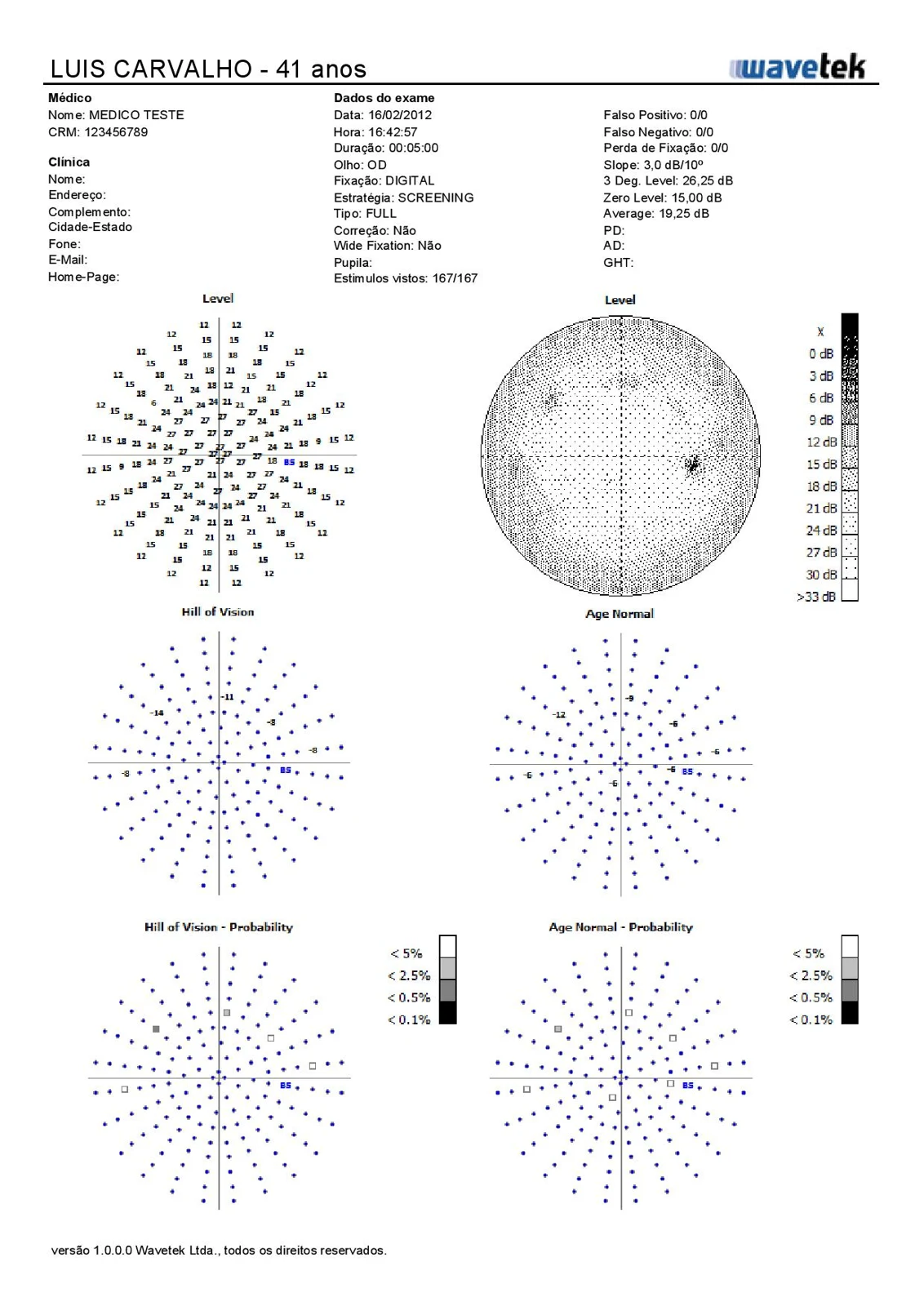
The archive includes front views, touchscreen and joystick details, software screens and report examples. Comparative examples show a left eye with glaucoma and a healthy right eye using the Full 50° screening strategy. It also links to earlier visual-field research conducted with USP. Other manufacturers and brands mentioned in the source belong to their respective owners.
Instrument, imaging & software gallery

BROCHURES / VIDEOS / SCIENTIFIC REFERENCES
Explore VON.
English user manuals & guides
Technical-review editions of the full original instructions. Source differences and legacy interface labels are identified inside each document.
Instrument videos & recorded coverage
VON computerized perimeter — operation and examination demonstration, Part 1
Watch the original video ↗Product recording / YOUTUBEVON computerized perimeter — operation and examination demonstration, Part 2
Watch the original video ↗Product recording / YOUTUBEVON perimetry and its R&D team — NET science-news report
Watch the original video ↗Related scientific publications
Foundational research related to this field. These articles are not clinical validation of a future instrument configuration.
[Vision measurement and psychophysical tests].
KRONBAUER, A. L. ; Schor ; CARVALHO, LA .
Read the journal / DOI source ↗Original instrument documents & sources
Brochures and manuals link to English EVOptica editions. Historical recordings, source citations and legacy interface screenshots may retain their original language. External archive links may no longer be available.